Low-Cost Airlines: What Is Included and How to Avoid Surprises
Budget fares are great when your trip fits the rules. Learn what is included, how check-in works and the checklist that avoids gate fees.
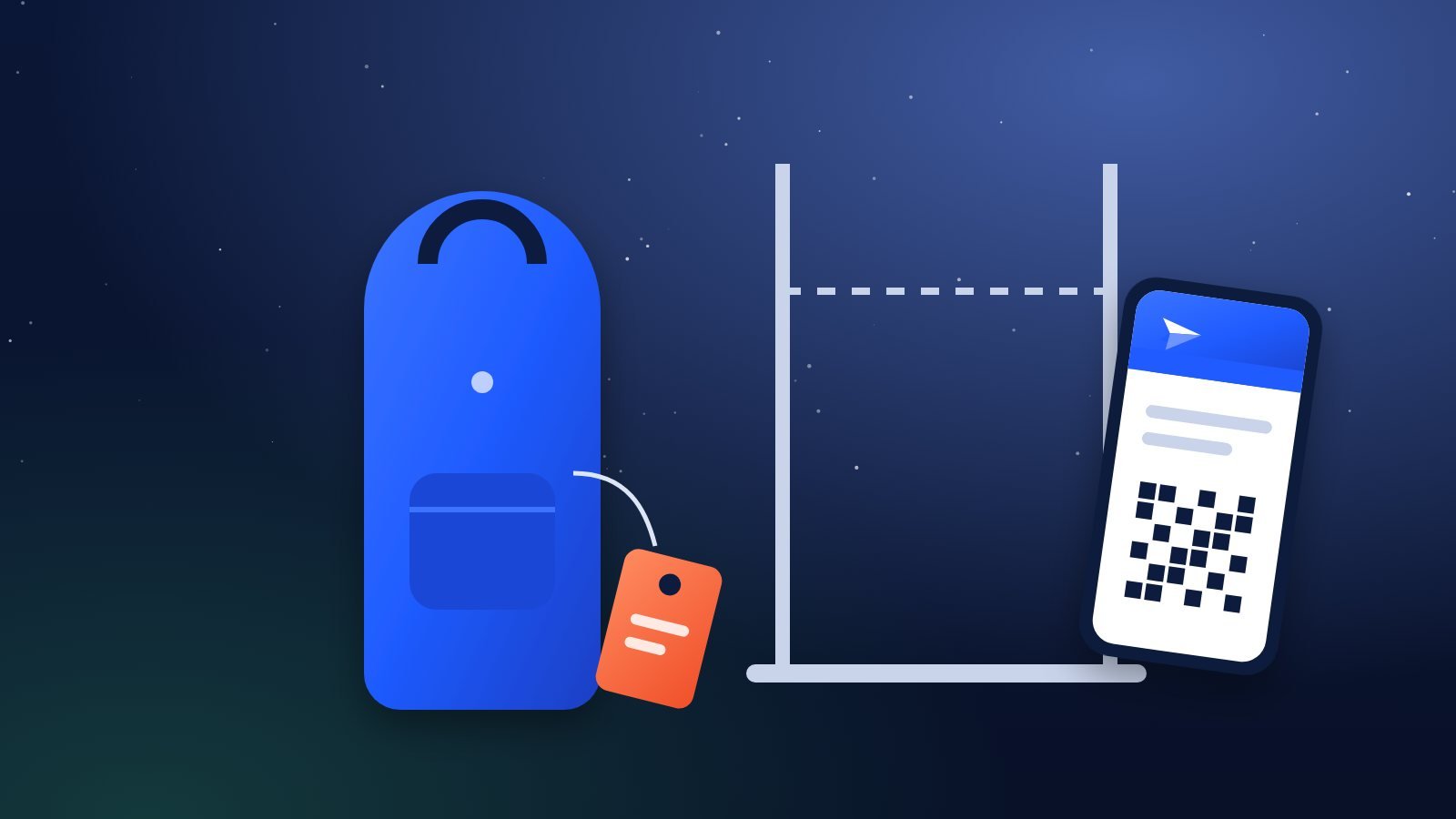
Low cost airlines baggage rules are the first thing to read before you book a budget fare, because the bag you plan to carry decides whether the ticket stays cheap. Low-cost carriers can be a great deal when you know what the base fare covers and what it does not. This guide sets out what is usually included, where the surprises hide, and a checklist to get through the airport without extra charges.
Key takeaways
- Most low-cost fares include one small under-seat bag; larger cabin bags and checked bags usually cost extra.
- Bag sizes differ by airline, so measure your bag against the rule for the airline you are flying.
- Check-in windows, boarding pass formats and ID rules are stricter than many travelers expect.
- Extras are typically cheaper when bought online in advance than at the airport or gate.
- A budget fare is the best choice when your trip fits its rules; when it does not, compare the full price.
What a low-cost fare usually includes
A low-cost airline sells the seat and the flight, then prices most other services separately. That model lets travelers pay only for what they use, but it also means two people on the same plane can pay very different totals.
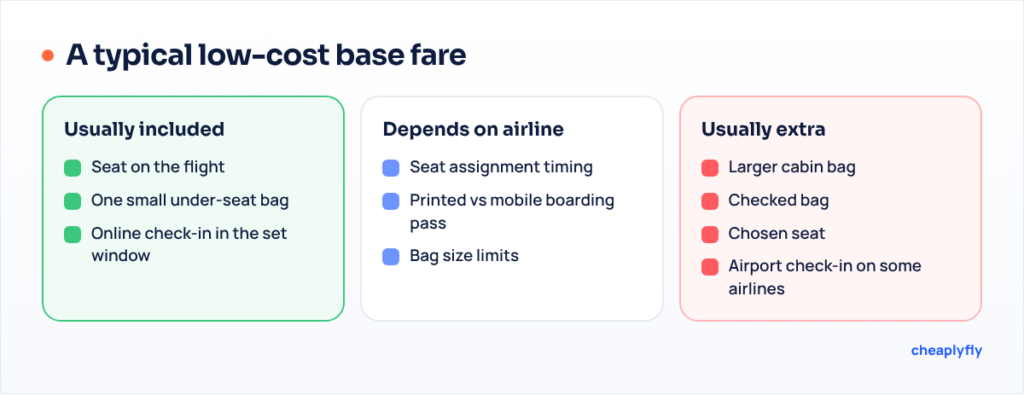
In most cases the base fare includes:
- A seat on the flight, often assigned at random when you check in.
- One small personal item that fits under the seat in front of you.
- Online check-in within the airline’s set window.
Items that are commonly sold separately include a larger cabin bag, checked bags, a chosen seat, priority boarding, onboard food and drink, and changes to the booking. Many airlines also sell bundles that group these at a lower combined price. To see how bundles compare with traditional fare types, read our guide to fare classes and fare families.
Low cost airlines baggage: sizes and rules to check
The single most common surprise is a bag that is a few centimeters too big. Each airline sets its own dimensions, and they change from time to time. As examples from the airlines’ own pages, as of Oct 2026:
| Airline (example) | Included small bag | Larger cabin bag |
|---|---|---|
| easyJet | Up to 45 x 36 x 20 cm, including handles and wheels, under the seat | Up to 56 x 45 x 25 cm, for a fee or with certain fares |
| Ryanair | One small bag that fits under the seat; check the size shown in your booking | Up to 10 kg and 55 x 40 x 20 cm with Priority and 2 Cabin Bags |
| Wizz Air | Up to 40 x 30 x 20 cm, under the seat | Up to 55 x 40 x 23 cm with WIZZ Priority |
| Spirit Airlines | Up to 18 x 14 x 8 in, including handles and wheels | Up to 22 x 18 x 10 in, not included on its basic fare |
Sources: easyJet cabin bag and hold luggage, Ryanair bag policy, Wizz Air baggage allowance and Spirit Airlines bag information. Always confirm the rule shown on your own booking, since allowances depend on the fare you buy.
Staff may check bags in a sizer at the gate. A bag that does not fit can be refused or moved to the hold for a fee, and gate fees are typically higher than buying the allowance online in advance.
For general advice on soft bags, packing cubes and what counts as a personal item, see our guide to carry-on rules explained.
Check-in and boarding pass rules
Low-cost airlines keep costs down by moving check-in online, so the deadlines matter. Missing a window can cost money, and at worst it can cost you the flight. Here is how the process typically runs, with airline examples:
- At booking
Add any bags and seats you need now; many airlines price these lower online than at the airport. Make sure names match your passport or ID exactly.
- When online check-in opens
Windows differ. easyJet opens online check-in 30 days before departure. Ryanair opens it 24 hours before for travelers with a free random seat, or up to 60 days before if a seat was bought.
- Before online check-in closes
Both easyJet and Ryanair close online check-in 2 hours before departure. Ryanair charges a per-passenger fee to check in at the airport instead.
- Boarding pass in hand
Save it in the airline’s app or wallet. Ryanair stopped accepting printed boarding passes at airports from 12 Nov 2025, while easyJet notes that some airports still require a printed pass.
- At bag drop
Checked bags must be dropped before the desk closes, often 40 to 60 minutes before departure depending on airport and airline. easyJet asks for photo ID at bag drop and the gate on all flights.
- At the gate
Gates close before departure; easyJet, for example, closes gates 30 minutes before. Have your boarding pass and ID ready, with your bag already within the size limit.
The exact times are on your booking confirmation and the airline’s help pages, such as easyJet check-in and Ryanair on not checking in online. If you change a booking, you may need to check in again and get a new boarding pass.
Is a budget fare right for your trip?
Pros
- Low base fares, especially for short trips with light luggage.
- You pay only for the extras you actually use.
- Often serve secondary airports and point-to-point routes that full-service carriers skip.
- Simple one-way pricing makes mixing airlines or open-jaw trips easy.
Cons
- Bags, seats and changes can push the total above a full-service fare.
- Strict size limits, check-in deadlines and gate checks.
- Secondary airports can mean longer, pricier ground transfers.
- Fewer daily flights, so fewer options if something goes wrong.
The deciding factor is usually luggage, which is why low cost airlines baggage rules deserve a careful read before you book. If you travel with only a small bag, a low-cost fare is hard to beat. If you need a checked bag each way, run the numbers using our guide to the true cost of a cheap fare.
Budget airlines often fly from smaller airports too. Our guide to nearby airports and alternative routes shows how to add ground transport and time to the comparison.
The budget airline survival checklist
Run through this list a few days before you fly. It takes ten minutes and covers the mistakes that most often lead to extra charges.
Before you fly
- Your bag fits the airline’s exact size and weight limits for your fare, including wheels and handles.
- Any checked bag or larger cabin bag is already on the booking.
- Names on the booking match your passport or ID exactly.
- You know when online check-in opens and closes, and have set a reminder.
- Your boarding pass is saved in the app, or printed if your airport requires it.
- You know the bag drop and gate closing times for your airport.
- Your travel documents and any visas are ready for the destination.
- You have checked how to get from the arrival airport to your accommodation, including the last train or bus.
Wear your bulkiest layers on board rather than packing them. It frees space in a small bag without breaking any rule.
When things go wrong on a budget airline
Low-cost airlines have the same legal duties as other airlines in the regions where they operate. Your protections after a delay or cancellation depend on regional rules and on where the flight departs, not on the fare price. As one example, the EU’s air passenger rights regulation, Regulation (EC) No 261/2004, covers flights departing from EU airports regardless of airline.
What is different is the network. With fewer flights per day and limited partnerships with other airlines, the next available seat may be later. Keep the airline’s app installed for updates, and keep receipts for any expenses you may claim. If you booked separate tickets to connect, remember that a delay on one flight does not protect the next.
When you are ready to compare budget fares with full-service options, search on Cheaplyfly and open the fare details for each result before you continue to the airline or agency to book. Start from our flight search.
Frequently asked questions
Do low-cost airlines include a carry-on bag?
Most include one small personal item that fits under the seat. A larger cabin bag for the overhead bin usually costs extra or comes with a higher fare bundle.
What happens if my bag is too big at the gate?
The airline may refuse it or move it to the hold for a fee. Gate fees are often higher than adding the allowance online, so measure your bag before you leave.
Do I have to check in online?
Many low-cost airlines expect online check-in and charge for airport check-in. Check the airline’s window and set a reminder so you do not miss it.
Can I use a mobile boarding pass?
Usually, yes. Some airlines now require a digital pass, while a few airports still ask for a printed one. Check the airline’s rules for your departure airport.
Do I get a seat next to my travel companion for free?
Not always. Free seats are often assigned at random at check-in. If sitting together matters, consider paying for seats or check the airline’s family seating policy.
Are low-cost airlines always cheaper?
No. Once bags, seats and changes are added, a full-service fare can cost the same or less. Compare the full price for your actual needs.